
June is Bowel Cancer Awareness Month
June 17 2026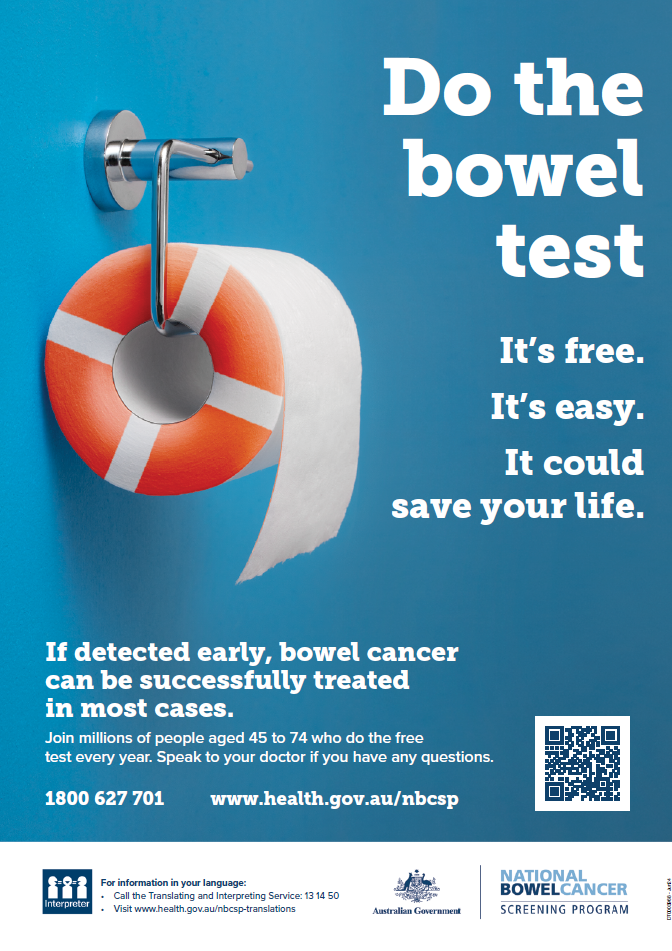
June is Bowel Cancer Awareness Month
What every Australian should know — and why early detection saves lives
Bowel cancer is Australia’s second deadliest cancer. But when caught early, up to 99% of cases can be treated successfully. This June, Geelong Medical & Health Group encourages every patient to know the signs, talk to their doctor, and take action.
Why This Matters
Bowel cancer — also called colorectal cancer — affects the colon or rectum and can develop in people of all ages, though the risk increases significantly after 50. Despite being highly preventable and treatable, far too many Australians are diagnosed at a late stage simply because they didn’t recognise the warning signs or hadn’t been screened.
The numbers are significant:
- Around 15,000 Australians are diagnosed with bowel cancer every year — more than 286 people every week
- Over 5,300 lives are lost to bowel cancer annually
- More than 163,000 Australians are currently living with or beyond bowel cancer
- When detected at its earliest stage, the survival rate is up to 99%
Know the Symptoms
Many people with bowel cancer have no symptoms in the early stages — which is exactly why screening matters so much. However, if you notice any of the following, don’t wait. Book an appointment with your GP:
- Blood in your stool or rectal bleeding
- A persistent change in bowel habits (diarrhoea, constipation, or both) lasting more than a few weeks
- Unexplained weight loss
- Ongoing abdominal pain, cramping, bloating, or discomfort
- A feeling that your bowel hasn’t fully emptied after going to the toilet
- Extreme or unusual tiredness that doesn’t improve with rest
- A lump in your abdomen or rectum
These symptoms can have many causes, most of which are not cancer. But they should always be checked by a doctor. Early conversations with your GP can be lifesaving.
Who Is at Risk?
Bowel cancer can affect anyone, but certain factors increase your risk:
- Age 45 or older
- A personal or family history of bowel cancer or bowel polyps
- A diet high in processed or red meat and low in fibre
- Low levels of physical activity
- Being overweight or obese
- Smoking or high alcohol consumption
- A history of inflammatory bowel disease such as Crohn’s disease or ulcerative colitis
- Certain hereditary conditions such as Lynch syndrome or familial adenomatous polyposis (FAP)
If you have one or more of these risk factors, speak to your GP about a personalised screening plan.
Screening: The Most Powerful Tool You Have
Regular screening is the most effective way to detect bowel cancer early — often before symptoms appear. There are two main options:
Faecal Immunochemical Test (FIT)
The FIT test is a simple at-home test that detects tiny amounts of blood in your stool. Eligible Australians aged 50–74 receive a free FIT kit every two years through the National Bowel Cancer Screening Program. Bowel Cancer Australia recommends starting screening from age 40. If you’ve received a kit in the mail and haven’t used it yet, now is the time.
Colonoscopy
A colonoscopy gives your doctor a direct view of the entire bowel and is the gold standard for both diagnosis and polyp removal. If your FIT result comes back positive, or if you’re at higher risk due to family history or other factors, your GP will likely refer you for a colonoscopy. Our team can guide you through that process.
Reduce Your Risk: Lifestyle Matters
A significant number of bowel cancer cases are linked to lifestyle factors within our control:
- Eat more fibre — fruit, vegetables, legumes, and wholegrains
- Limit red and processed meats to no more than 3–4 serves per week
- Move more — aim for at least 30 minutes of moderate activity most days
- Maintain a healthy weight
- Limit alcohol
- Quit smoking
- Keep up with your regular screening
Talk to Your Doctor This June
If you’re due for screening, have symptoms you’ve been putting off, or simply want to discuss your bowel cancer risk — we’re here to help. Book an appointment with your nearest Geelong Medical & Health Group clinic today.
This article is for general health awareness purposes only and is not a substitute for professional medical advice. Always consult your GP or a qualified health professional with questions about your health.