
Prepare for Thunderstorm Asthma Season
September 23 2026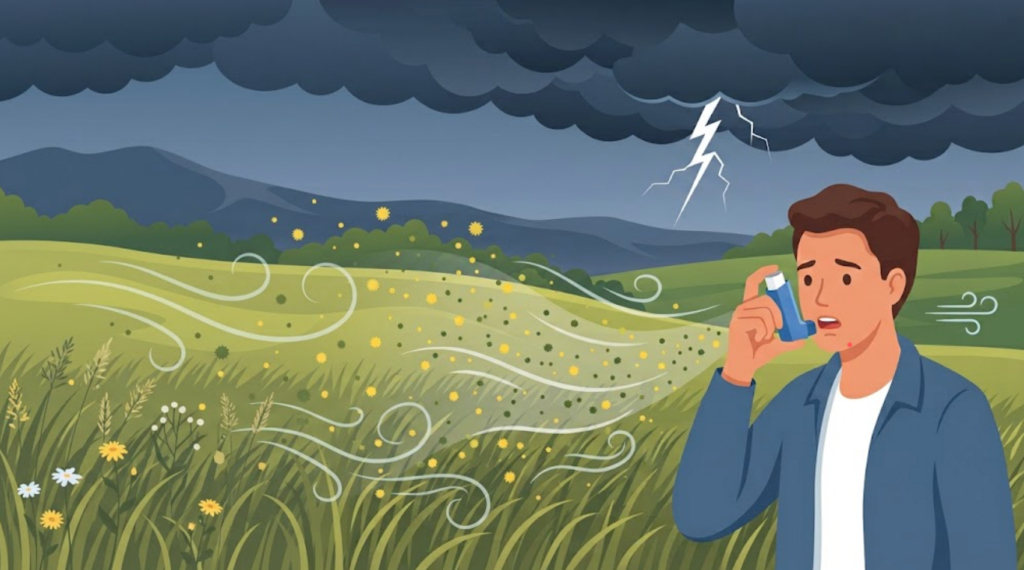
From 1 October to 31 December each year there is an increased chance of an epidemic thunderstorm asthma event whereby a mix of high grass pollen counts combined with specific weather conditions can increase the risk of people experiencing severe asthma symptoms.
Thunderstorm asthma can affect anyone. However, people with asthma or springtime hay fever – especially those who experience wheezing or coughing with their hay fever – are at highest risk.
What causes thunderstorm asthma?
Grass pollen grains can be carried by wind over long distances. The grains can burst open and release a concentration of tiny particles that then distribute in wind gusts just prior to a thunderstorm.
This can trigger asthma symptoms if people breathe these particles into their lungs.
Symptoms can include;
- Coughing
- Wheezing
- Chest tightness
- Shortness of breath
Who is at risk?
People at risk of thunderstorm asthma include those:
- with current or past asthma
- with undiagnosed asthma
- who get hay fever during the spring months.
People who experience both asthma and hay fever have an even higher risk of thunderstorm asthma, particularly if their asthma is not properly controlled.
People with asthma and/or who are susceptible to hay fever should speak with a GP to discuss management and treatment plans. You can also prepare by:
- Monitoring the VicEmergency Epidemic Thunderstorm Risk Forcecast from October to December.
- If there is a risk of a thunderstorm asthma event, take preventative medication as directed, even if you are yet to show symptoms.
- Develop an action plan to monitor symptoms and determine what steps to take if symptoms are likely to cause serious illness.
- If relevant, ensure a supply of inhalers is on hand.
- Understanding in advance how to manage an asthma attack. See Asthma emergency first aid | Better Health Channel